Horoscopes have been part of popular astrology for generations, offering readers interpretations of zodiac signs, planetary movements, and possible themes in everyday life. Traditionally, horoscope content has been prepared by astrologers using established interpretive systems and, depending on the type of reading, information about planetary positions and birth charts. Artificial intelligence has introduced another approach by allowing users to generate horoscope-style predictions through written prompts in a matter of seconds.
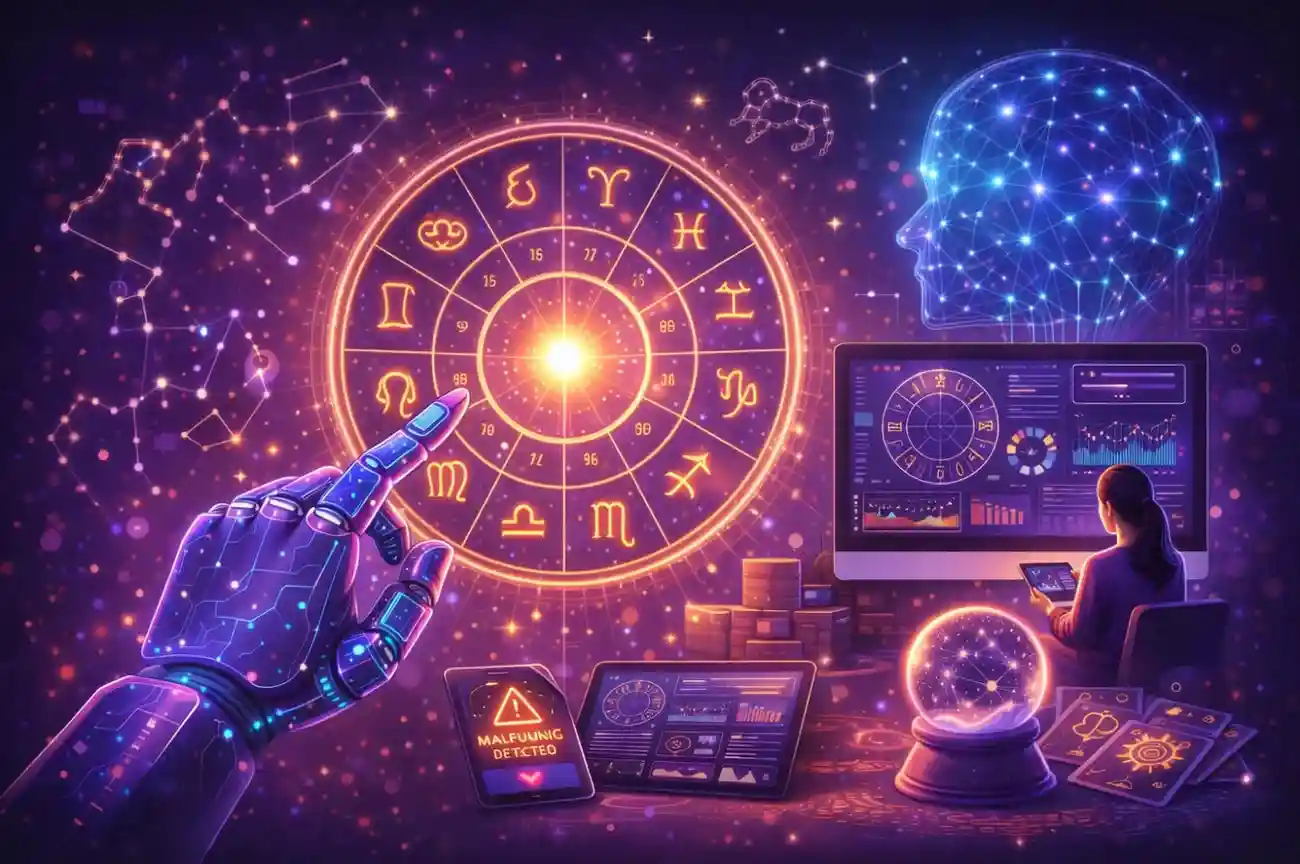
Although AI horoscope predictions and traditional astrology can produce similar-looking text, the processes behind them may be quite different. One approach may rely on an astrologer’s chosen methods and chart calculations, while the other may use a language model to generate a response based on patterns in data and the instructions it receives. Understanding this difference helps readers evaluate the strengths, limitations, and appropriate uses of each approach.
What Is Traditional Astrology
Traditional astrology refers to astrological practices that interpret celestial positions in relation to human life and earthly events. Different traditions have developed over centuries, including Western astrology, Vedic astrology, and other systems with distinct rules, symbols, and methods.
In popular Western astrology, daily horoscopes often focus on the twelve zodiac signs. More detailed readings may consider the Sun, Moon, planets, houses, aspects, and transits. An astrologer may calculate a chart using a person’s birth date, time, and location, then interpret the placements according to a particular astrological framework.
Traditional methods vary considerably. Some readings focus on broad symbolic themes, while others use more detailed calculations and interpretive techniques. The fact that a method has a long history does not establish that it can scientifically predict an individual’s future. Astrology is best understood as a cultural and interpretive tradition rather than a scientifically validated forecasting system.
What Are AI Horoscope Predictions
AI horoscope predictions are astrology-style readings generated with the assistance of artificial intelligence. A user might ask a general-purpose AI assistant for a daily horoscope, a weekly reading, a love prediction, or an explanation of a particular zodiac sign. The system generates text based on the prompt and patterns it has learned from language data.
Some AI tools may use external information, such as current planetary positions or a calculated birth chart, if those capabilities are available. Others may simply produce a general reading without checking astronomical data. This distinction matters because a fluent response does not necessarily mean that the system has performed a correct astrological calculation.
AI can generate new wording quickly and adapt the reading to a requested tone. However, it may also invent planetary placements, confuse dates, or make unsupported claims. The output needs to be reviewed, especially when the request involves specific celestial events or detailed birth chart interpretations.
The Main Differences Between AI and Traditional Astrology
1. How the Reading Is Created
Traditional astrology generally uses an established interpretive framework chosen by the astrologer. Depending on the reading, the process may involve calculating a chart, identifying planetary positions, and applying traditional meanings to those placements.
AI horoscope generation starts with a prompt and produces text through a language model. If the model is not connected to verified chart data or a suitable calculation tool, it may rely on general patterns rather than accurate planetary information. An AI reading can resemble a traditional horoscope without following a consistent astrological method.
2. Speed and Convenience
AI can generate a horoscope almost immediately. Users can request a different zodiac sign, a shorter version, or a focus on relationships and work without starting a new process from scratch. This makes AI useful for brainstorming, personal entertainment, and creating draft content.
Traditional astrology may take longer when a reading requires detailed chart calculations and individualized interpretation. However, many traditional horoscope websites also publish short readings quickly, and modern astrologers frequently use software to calculate charts. The difference is therefore not simply that one is fast and the other is slow. It depends on the complexity of the reading and the tools being used.
3. Personalization
A general daily horoscope often addresses a broad audience based on Sun signs. Traditional astrologers may create more individualized interpretations by considering a complete birth chart, depending on their approach.
AI can also produce personalized-looking content if users provide information about their interests or supply verified chart placements. Yet personalization in the wording does not automatically make the interpretation accurate. If an AI tool has not calculated or verified the chart, it may produce a detailed reading based on incorrect assumptions.
For a more reliable comparison within an astrological framework, the chart information should be calculated separately and checked before the interpretation is generated.
4. Consistency of Interpretation
Traditional astrologers may follow particular schools, techniques, and interpretive principles. Their readings can still differ because astrology includes many traditions and because individual practitioners may interpret the same chart differently.
AI responses can vary with prompt wording, model behavior, and available context. Asking the same question twice may produce different examples or interpretations. A well-designed system can improve consistency by using a fixed framework and verified data, but a general AI assistant should not automatically be assumed to follow one coherent astrological method.
5. Use of Planetary Data
Some forms of traditional astrology use specific planetary positions, aspects, houses, and transits. Accurate calculations matter when a reading depends on these details.
AI language generation alone does not guarantee correct astronomical or astrological data. A model may describe a planetary event that did not occur or assign an incorrect placement to a zodiac sign. Tools that incorporate reliable ephemeris data or chart calculations can reduce this risk, but the information should still be checked.
If you want a general horoscope for entertainment, exact planetary data may not be central to your goal. If you want a reading based on a specific date or birth chart, verification becomes more important.
6. Writing Style and Flexibility
AI can adapt the format of a horoscope to different audiences. It can generate a friendly paragraph, a detailed article, a short social media post, or a reading focused on one subject. It can also rewrite a passage in simpler language or suggest reflection questions.
Traditional astrology content may reflect an astrologer’s individual writing style, experience, and preferred interpretive approach. AI offers convenience and rapid variation, but its writing may become repetitive or overly generic if prompts are not carefully designed. Human editing remains useful for both approaches when clarity and originality matter.
A Simple Comparison
| Feature | AI Horoscope Predictions | Traditional Astrology |
|---|---|---|
| Content creation | Generated from prompts and learned language patterns | Interpreted through an astrological framework |
| Speed | Often produces text within seconds | Depends on the type of reading and tools used |
| Personalization | Depends on the prompt and verified information supplied | May use an individual’s birth chart |
| Planetary accuracy | Requires verified data or suitable calculation tools | Depends on the accuracy of calculations and interpretation |
| Writing flexibility | Can quickly change tone, format, and length | Depends on the astrologer’s approach |
| Consistency | May vary with prompts and model behavior | May vary between astrologers and traditions |
| Scientific status | Not scientifically validated as a way to predict personal events | Not scientifically validated as a way to predict personal events |
This comparison describes common tendencies rather than fixed rules. Some AI tools incorporate reliable chart calculations, and some traditional horoscope services publish broad sign-based readings without individualized charts.
Which Approach Is Better for Daily Horoscopes
The best option depends on what you want from the experience. If you want a quick, customizable reading for entertainment, AI may be convenient. You can ask for a short horoscope focused on communication, motivation, or personal reflection and revise the wording to suit your preferences.
If you are interested in the history, methods, or specific interpretive rules of a particular astrological tradition, a knowledgeable astrologer or a well-researched educational resource may provide more context. For chart-based readings, verify the underlying placements rather than relying on a tool simply because it sounds confident.
Neither approach should be treated as a dependable method for predicting specific personal outcomes. Horoscope readings may offer a framework for reflection, but they cannot reliably establish whether someone will find a partner, receive a promotion, or experience a financial change.
How to Use AI Responsibly for Horoscope Content
Start by stating the zodiac sign, date, topic, and type of reading you want. If you want planetary interpretations, supply verified data or use a tool that can calculate it accurately. Ask for balanced language and practical reflection rather than guaranteed predictions.
Review the response for invented events, incorrect placements, repeated wording, and claims that sound overly certain. If you publish AI-generated horoscope content, edit it for originality and make sure it does not mislead readers about what astrology can establish.
Avoid using horoscopes as substitutes for medical, legal, financial, or mental health advice. Be cautious with readings that use fear, promise guaranteed wealth, or pressure people to make major decisions. A responsible horoscope can be entertaining without presenting uncertain claims as facts.
Can AI Replace Traditional Astrologers
AI can automate parts of horoscope writing, explain common astrological terminology, and help users explore different interpretations. It can also assist with organizing information and generating draft content. However, its ability to produce fluent text does not mean it has the judgment, experience, or interpretive consistency of a skilled human practitioner.
Some astrologers may use AI as a supplementary tool while continuing to apply their own methods and verify chart calculations. Others may prefer to work without it. The two approaches are not necessarily mutually exclusive, especially when technology is used for drafting rather than as a substitute for expertise.
It is also important to separate professional skill within an astrological tradition from scientific validation. Even a carefully calculated and thoughtfully interpreted horoscope is not established as a reliable method for forecasting individual events.
Conclusion
AI horoscope predictions and traditional astrology can share similar vocabulary and themes, but they differ in how readings are produced, how information is verified, and how consistently a particular interpretive method is followed. AI offers speed, flexible writing, and convenient customization, while traditional approaches may provide a clearer connection to a specific astrological framework and its methods. Both require thoughtful interpretation, and neither should be treated as a scientifically proven way to predict personal outcomes. Choose the approach that suits your interests, verify important details, and use horoscope content as entertainment or reflection rather than as the basis for major life decisions.