Astrology has attracted interest from people who want to explore personality descriptions, emotional patterns, relationships, and personal goals through the positions of celestial bodies at the time of birth. Traditionally, interpreting a birth chart required familiarity with astrological symbols, planetary placements, zodiac signs, and houses. Today, artificial intelligence tools can help beginners understand these concepts by explaining complicated terms in everyday language and organizing chart information into readable summaries. Although AI can make astrology easier to explore, it is important to remember that astrological interpretations are not scientifically established methods for predicting personality or future events.

What Is a Birth Chart
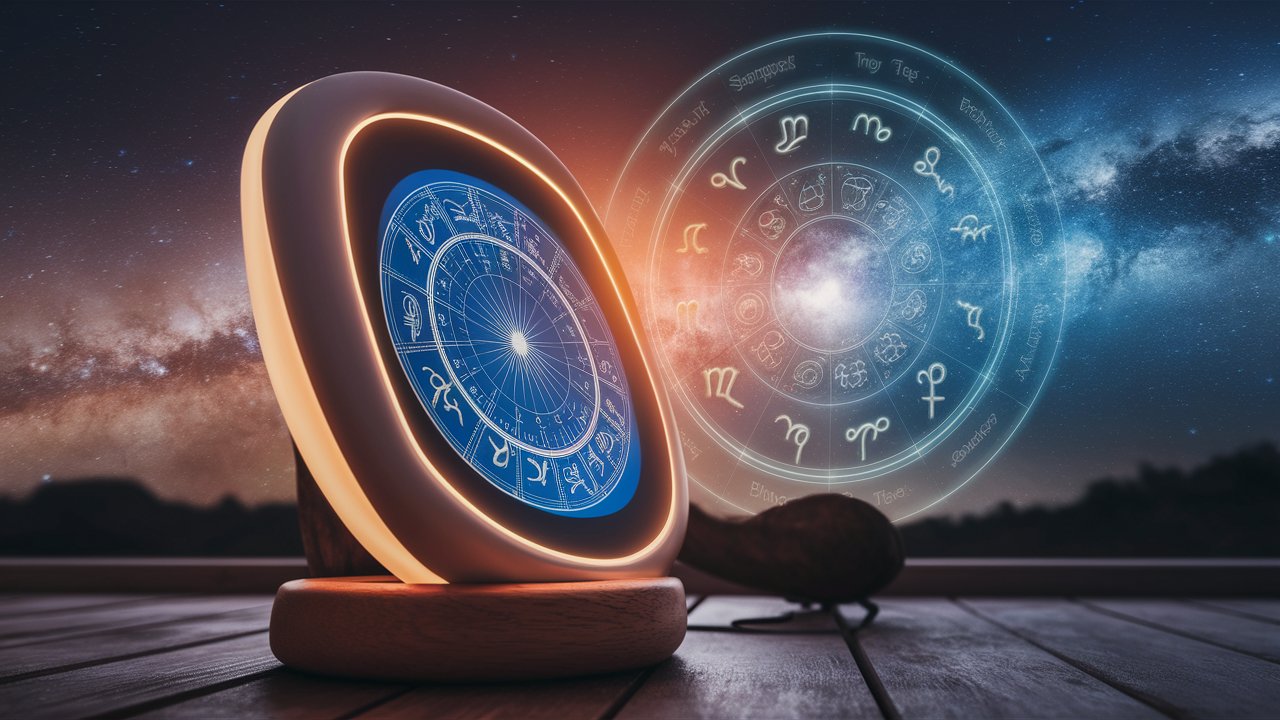
A birth chart, also called a natal chart, is a diagram used in astrology to represent the positions of the Sun, Moon, planets, and other significant points at a person’s birth. Astrologers interpret these positions according to a particular astrological system. The chart typically includes zodiac signs, astrological houses, and aspects, which describe the angular relationships between planets.
To calculate a traditional natal chart, an astrology tool usually needs the birth date, birth time, and birthplace. The birth time is particularly important because the rising sign and house placements can change as the Earth rotates. If the birth time is unknown or inaccurate, some parts of the chart may be unreliable. An AI assistant can explain the chart you provide, but its interpretation depends on the accuracy of the underlying astronomical calculations.
How AI Helps Beginners Understand Astrology
AI tools can simplify astrological terminology, explain the difference between planetary placements, and summarize information from a chart report. For example, a beginner might not understand what it means when an astrologer describes a planet as being in a particular sign and house. An AI assistant can explain that the sign represents one layer of astrological interpretation, while the house is traditionally associated with an area of life.
AI can also help compare interpretations from different astrology resources, generate questions for further study, and organize unfamiliar concepts into a learning plan. However, a language model may sometimes misinterpret chart data, confuse planetary placements, or provide confident explanations that do not match the chosen astrological tradition. Use a reliable chart calculator for the positions and treat AI as an explanatory assistant rather than an unquestionable authority.
Gather Your Birth Information
Before using an AI birth chart tool, collect the information needed to calculate your natal chart. This normally includes your date of birth, the most accurate available birth time, and the city or location where you were born. Birth time may be recorded on a birth certificate or another reliable document, depending on local practices.
If you do not know the exact time, avoid inventing one simply to complete the chart. Some tools can create a chart without a confirmed time, but the rising sign and houses may be missing or uncertain. You can still explore general placements, such as the Sun sign, provided the date and calculation method are appropriate. Be cautious about sharing personal details with unfamiliar services, especially when a tool requests information unrelated to the chart calculation.
Calculate Your Natal Chart Before Asking AI
Start with an astrology calculator that allows you to enter your birth details and select the appropriate chart settings. Depending on the service, you may encounter different house systems, zodiac settings, and options for displaying planetary positions. These choices can produce differences in some chart elements, so use one consistent method when learning the basics.
Once the chart is calculated, save the written list of placements if one is available. This may include the Sun, Moon, Mercury, Venus, Mars, rising sign, and house positions. A written list is often easier for an AI assistant to interpret than an image containing many small symbols. If you upload a chart image, check the resulting interpretation against the original information to catch reading errors.
Understand the Big Three
Many introductory astrology guides begin with the Sun sign, Moon sign, and rising sign, often called the Big Three. Within astrological interpretation, the Sun is commonly associated with identity and conscious self-expression. The Moon is linked with emotional responses and inner needs, while the rising sign is traditionally connected with outward presentation and the way a person approaches new situations.
These descriptions are symbolic interpretations rather than scientifically verified personality categories. They can nevertheless provide a useful structure for learning astrological vocabulary. Ask AI to explain each placement separately before requesting a combined interpretation. This makes it easier to see what each element is supposed to represent within astrology and reduces the chance of confusing different concepts.
Learn About Planets and Zodiac Signs
Each planet has a traditional symbolic role in astrology. Mercury is commonly associated with communication and thinking, Venus with affection and preferences, and Mars with action and assertion. Jupiter is often connected with growth and opportunity, while Saturn is associated with structure, limits, and responsibility. Outer planets such as Uranus, Neptune, and Pluto are interpreted differently across astrological schools and may be discussed in relation to broader themes.
The zodiac sign containing a planet adds another layer of meaning in astrological practice. For example, an astrologer might interpret Mercury in Gemini differently from Mercury in Taurus because the signs are associated with different qualities. Ask AI to describe the traditional meaning of a placement, provide a simple example, and explain alternative interpretations. This approach helps you learn without assuming that any one description must fit your life.
Explore the Twelve Astrological Houses
Astrological houses divide the chart into twelve sections associated with different areas of experience. The first house is commonly linked with identity and presentation, while the second is associated with resources and personal values. Other houses are traditionally interpreted in relation to communication, home, creativity, work, relationships, shared resources, education, travel, career, friendships, and private life.
The exact interpretation can vary between astrological traditions and house systems. Rather than memorizing all twelve houses at once, ask AI to explain a few at a time and show how a planet in a house is interpreted. For instance, a traditional reading of Venus in the seventh house might emphasize partnership themes. That description is an astrological convention, not evidence that a person’s relationships will follow a particular pattern.
Use AI Prompts That Encourage Clear Explanations
A well-structured prompt can improve the usefulness of an AI birth chart interpretation. Instead of asking for a complete prediction about your life, request a beginner-friendly explanation of specific placements. You might ask the tool to explain the Sun, Moon, and rising signs in plain English, define unfamiliar terms, distinguish symbolic interpretation from established fact, and point out any missing birth information.
You can also ask for a neutral overview that includes more than one possible interpretation. This helps avoid overly flattering or frightening descriptions. If the AI gives a conclusion that seems confusing, request an explanation of which chart placement supports it. If it cannot identify the relevant placement, verify the information independently rather than accepting the claim.
Interpret Aspects and Chart Patterns
Aspects describe angular relationships between planets in a natal chart. In astrology, a conjunction generally refers to planets positioned close together, while a trine and square refer to particular angular relationships. Astrologers assign symbolic meanings to these configurations and may use them to describe perceived tensions, connections, or complementary themes.
Beginners do not need to interpret every aspect immediately. Start with the major aspects listed in your chart report and ask AI to explain their traditional meanings. Request examples in simple language and ask how different astrologers might interpret the same configuration. Remember that these readings are part of an interpretive belief system rather than a reliable method of diagnosing psychological traits or forecasting events.
Avoid Common AI Birth Chart Mistakes
One frequent mistake is assuming the AI has calculated the chart correctly when it has only received incomplete information. Another is mixing different astrological systems without recognizing that they may use different zodiac settings or house calculations. A tool may also invent a placement if you ask it to interpret a chart without supplying the relevant data.
To reduce these problems, use a dedicated calculator for chart positions, provide a clear list of placements, and ask the AI to identify uncertainty. Do not treat a birth chart as a substitute for professional medical, legal, financial, or psychological advice. Avoid making major life decisions solely because an interpretation sounds convincing.
Conclusion
AI can make birth chart interpretation more accessible by translating astrological terminology into clear explanations and helping beginners explore planets, signs, houses, and aspects step by step. Start with accurate birth information, calculate the chart using a consistent method, and ask focused questions about individual placements before combining them. Most importantly, approach the results as symbolic astrology rather than scientific proof about personality or destiny. With curiosity and critical thinking, AI can become a useful learning companion for anyone interested in understanding the structure of a natal chart.