In astrology, the Moon sign is often associated with emotional responses, private feelings, familiar habits, and the ways people seek comfort. While many people know their Sun sign, the Moon sign adds another layer to a traditional birth chart interpretation. It is commonly used to explore themes that may feel more personal or less visible to others. AI astrology tools can help beginners identify their Moon sign, understand its traditional symbolism, and compare interpretations from different astrology resources. However, these descriptions should be approached as symbolic ideas rather than scientifically proven explanations of emotional behavior.
What Is a Moon Sign
Your Moon sign is the zodiac sign in which the Moon was positioned at the time represented by your natal chart. In astrology, the Moon is associated with feelings, instincts, habits, memories, and emotional comfort. The sign is interpreted as describing the style through which these themes may be expressed.
The Moon moves through the zodiac much faster than the Sun, typically changing signs every two to three days. As a result, people born only a short time apart can sometimes have different Moon signs. The exact position depends on the date, time, and location used for the chart calculation, especially when the Moon changes signs around the birth date.
Moon Sign Versus Sun Sign
The Sun sign is one of the most familiar elements of popular astrology and is traditionally associated with identity, vitality, and conscious self-expression. The Moon sign, by comparison, is often interpreted in relation to emotional habits, private needs, and reactions to familiar situations. The rising sign adds another layer that astrologers associate with outward presentation and the beginning of experiences.
These distinctions belong to astrological tradition rather than an established scientific model of personality. Still, understanding them can help beginners follow astrology articles and learn how a natal chart is organized. An AI assistant can explain the three placements separately and then summarize how an astrologer might combine them in a single reading.
How to Find Your Moon Sign
To identify your Moon sign, use a natal chart calculator that provides planetary positions. You will usually need your birth date, birth time, and birthplace. If the Moon was close to changing signs, the time may be particularly important. Different tools can also use different zodiac settings, so confirm that you are comparing results calculated with the same system.
If you do not know your birth time, you may still be able to determine the Moon sign when the Moon remained in one sign throughout the relevant date. If it changed signs that day, the result may be uncertain. Rather than allowing an AI chatbot to guess, use a reliable ephemeris or chart calculator and acknowledge any uncertainty in the final interpretation.
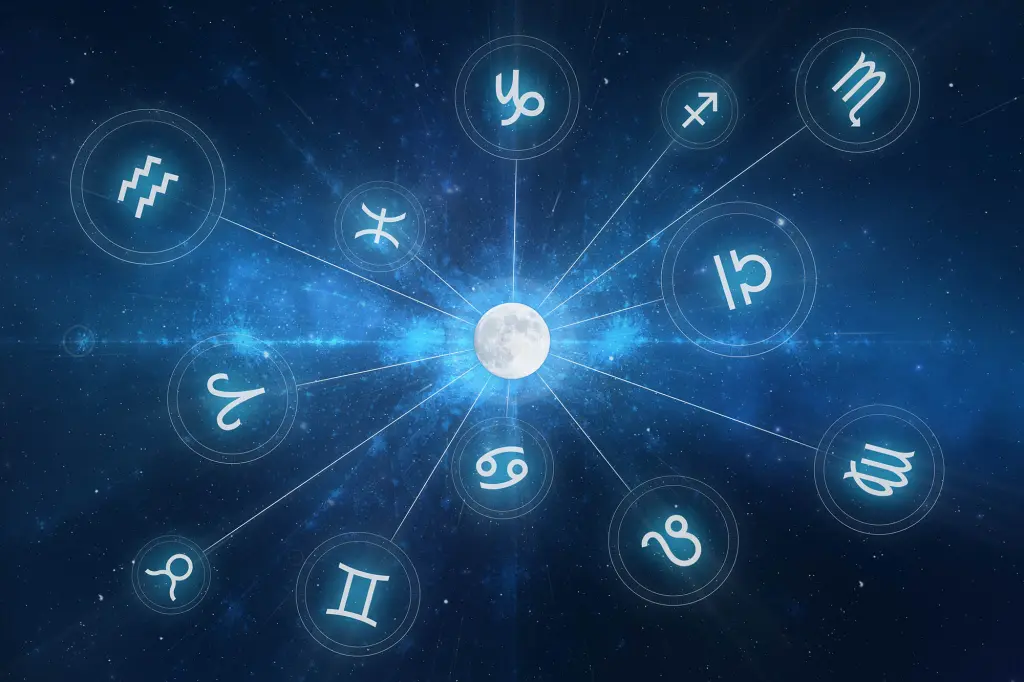
The Traditional Meaning of Each Moon Sign
Astrologers assign different symbolic qualities to each of the twelve Moon signs. These descriptions are general conventions, and individuals do not need to identify with every trait associated with their sign.
Aries Moon is often described through themes of quick emotional reactions, independence, and a preference for direct action. In an astrological reading, this placement may be used to discuss how someone responds to frustration or seeks a fresh start.
Taurus Moon is traditionally associated with steadiness, familiarity, and comfort. Astrologers may interpret it as a preference for predictable routines, sensory enjoyment, and a stable environment.
Gemini Moon is commonly linked with curiosity, communication, and the need to process experiences through conversation or thought. A traditional interpretation may emphasize variety and mental engagement.
Cancer Moon is often associated with sensitivity, memory, home, and emotional security. Astrologers may use it to explore themes of belonging and familiar relationships.
Leo Moon is frequently connected with warmth, creativity, loyalty, and recognition. Within astrology, this placement may be interpreted as a desire to express feelings openly or contribute something meaningful.
Virgo Moon is traditionally linked with practical support, organization, and attention to detail. Some readings emphasize finding comfort through useful routines and problem-solving.
Libra Moon is commonly associated with harmony, cooperation, and fairness. Astrologers may interpret it as an interest in balanced relationships and thoughtful communication.
Scorpio Moon is often described through themes of emotional intensity, privacy, and depth. In symbolic readings, it may be connected with trust, personal transformation, and a desire to understand complex feelings.
Sagittarius Moon is traditionally linked with freedom, exploration, optimism, and learning. Astrologers may interpret it as a preference for broad perspectives and opportunities to experience something new.
Capricorn Moon is often associated with responsibility, self-control, and practical stability. A traditional reading may focus on managing emotions through structure, planning, or long-term goals.
Aquarius Moon is commonly connected with independence, originality, and intellectual distance. Astrologers may interpret it as a preference for personal space or unconventional approaches to social connection.
Pisces Moon is often associated with imagination, empathy, and sensitivity to atmosphere. Some interpretations emphasize creativity, compassion, and a need for quiet reflection.
These descriptions can serve as starting points for exploring astrological language, but they should not be treated as fixed labels. Real emotional behavior is influenced by many factors, including experiences, relationships, circumstances, and individual differences.
What Your Moon Sign Says About Emotional Comfort
Within astrology, the Moon sign is frequently used to discuss what makes a person feel settled or emotionally comfortable. A reading might connect an earth-sign Moon with practical routines, a water-sign Moon with emotional connection, an air-sign Moon with conversation, or a fire-sign Moon with activity and self-expression.
These are broad symbolic associations rather than reliable rules. You may recognize some of them in your own experience and disagree with others. Use the interpretation as a reflection prompt instead of a final judgment about yourself. Questions such as what helps you relax, how you respond to change, and which habits support your well-being are useful regardless of whether you believe in astrology.
Using AI to Interpret Your Moon Sign
AI tools can explain your Moon sign in simple language, compare its traditional meaning with your Sun sign, and define unfamiliar astrological terms. To get a useful result, provide the confirmed Moon placement rather than asking the tool to calculate everything from scratch. You can ask for a neutral overview, practical examples, and a clear distinction between astrological symbolism and scientific evidence.
If you want to compare different interpretations, request the perspective of more than one astrological tradition. Be cautious if an AI tool claims that your Moon sign proves you have a particular mental health condition, guarantees a relationship outcome, or predicts a specific event. These claims go beyond what astrology can establish.
Moon Signs and Relationships
Some astrologers use Moon signs to discuss emotional compatibility and differences in comfort or communication styles. For example, a reading may compare one person’s preference for direct expression with another person’s preference for quiet processing. Such comparisons can encourage people to think about how they communicate, but Moon signs cannot reliably determine whether a relationship will succeed.
Healthy relationships depend on respect, trust, communication, shared expectations, and many circumstances that a birth chart cannot measure. If you use astrology for relationship reflection, treat it as a conversation starter rather than a replacement for listening to the other person.
Common Moon Sign Misunderstandings
A common misconception is that the Moon sign reveals a person’s entire emotional life. Another is that everyone with the same Moon sign behaves in the same way. Astrological interpretations are broad, and even within the tradition, astrologers consider other chart placements and aspects.
It is also a mistake to assume that an AI-generated interpretation is accurate simply because it sounds personal. Language models can create general statements that many people find relatable. Check the underlying chart data, question sweeping claims, and remember that your own experiences matter more than a symbolic label.
Conclusion
Your Moon sign is an important concept in traditional astrology because it is commonly associated with emotional habits, comfort, and private responses. Learning its meaning can help you understand birth chart terminology and explore different symbolic interpretations. AI tools can make that process easier by explaining placements and comparing ideas, but their results should not be mistaken for scientific personality assessments. Use Moon sign descriptions with curiosity, allow room for individual differences, and base important personal decisions on real circumstances rather than astrology alone.